

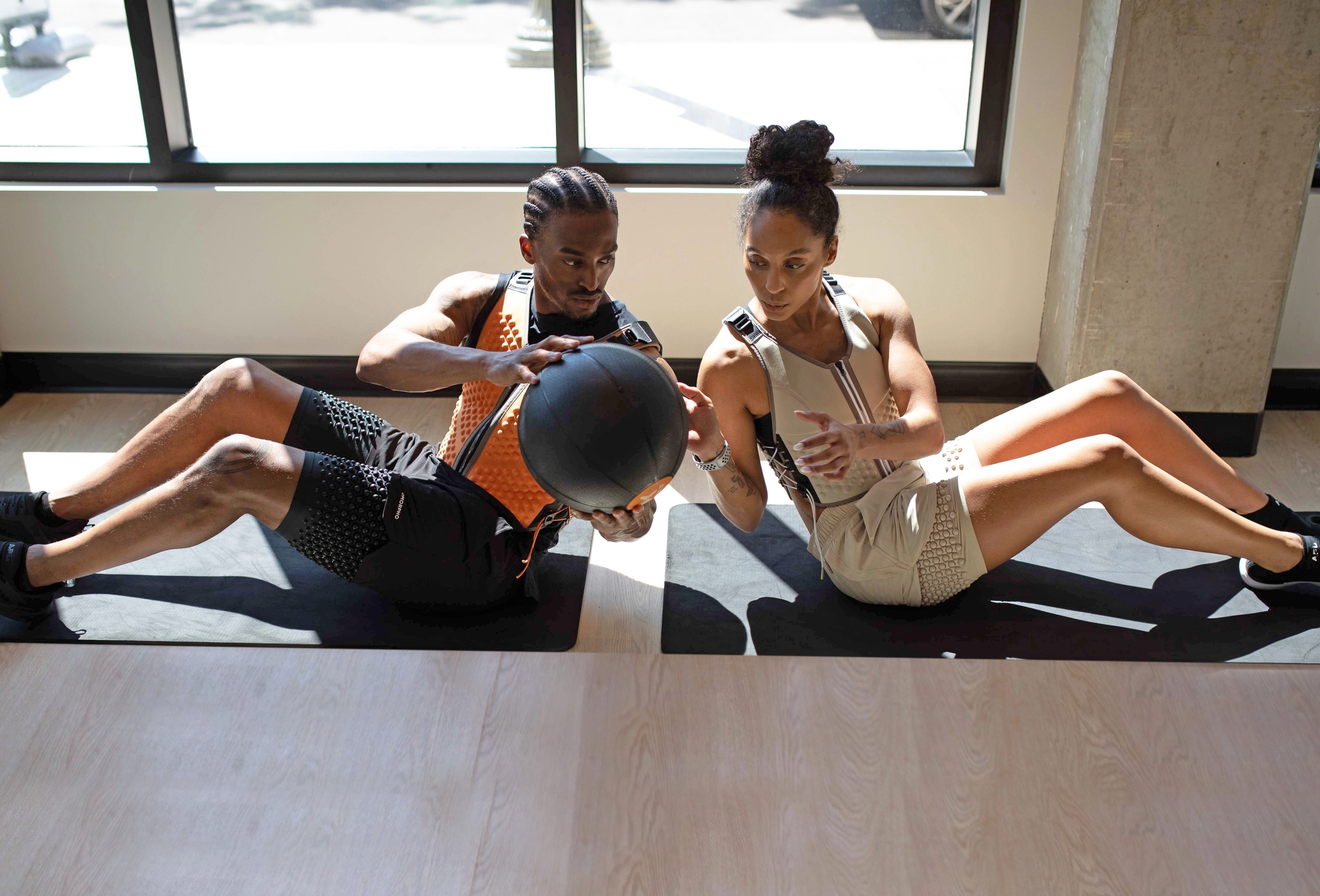
Hitting a plateau is one of the most frustrating parts of any fitness journey. You’re putting in the work, but the results have stalled. So, what’s the solution? Often, the answer is found by taking a closer look at your training structure. Shifting the balance between how much work you’re doing and how hard that work is can help you unlock new progress. This is the power of adjusting your volume vs intensity training. This guide will show you how to strategically manipulate these variables to break through plateaus, challenge your body in new ways, and improve your overall performance.
Key Takeaways
- Focus on your goal to guide your training: Use higher volume to improve endurance and work capacity, and higher intensity to build strength and force production.
- Combine volume and intensity for sustainable progress: Cycling between both approaches helps prevent plateaus and supports well-rounded performance.
- Incorporate weighted gear to enhance your workouts: OMORPHO MicroLoad™ apparel is a simple way to add to your total training volume, while a safe, high-quality G‑Vest is perfect for increasing intensity. This makes applying progressive overload easier and more effective.
Volume vs. Intensity: What's the Difference?
When you start structuring your workouts, you’ll often hear the terms "volume" and "intensity." Understanding what they mean and how they relate to each other is key to building a plan that actually gets you results. They are two of the most important variables you can adjust to make progress, whether your goal is to build muscle, get stronger, or improve your endurance. Let's break down what each one means.
What is training volume?
Think of training volume as the total amount of work you do during a session. It is the complete workload your body handles. The most common way to calculate it in strength training is to multiply your sets by your reps by the weight you lifted. Tracking volume gives you a clear way to measure your output and ensure you’re consistently challenging your body to adapt.
What is training intensity?
Training intensity refers to how difficult the work is. It is often defined by how heavy the weight is relative to your maximum ability. Higher intensity improves your ability to produce force and build strength. This concept also applies to other activities, where intensity can be measured by effort level or heart rate.
How they work together
Volume and intensity have an inverse relationship, meaning when one goes up, the other typically comes down. You can’t lift your absolute heaviest weight (maximal intensity) for a high number of reps (maximal volume). It’s a trade-off. If you’re lifting very heavy, you’ll naturally be able to complete fewer reps. Conversely, if you’re using lighter weights, you can perform more reps and sets. Finding the right balance between the two is essential for designing an effective training program that aligns with your specific goals, allowing you to focus on different physical adaptations.
How Volume and Intensity Build Strength and Performance
Think of volume and intensity as two different tools you can use to improve how your body performs. Volume reflects how much work you do, while intensity reflects how challenging that work is. Both are important for building strength, improving stability, and enhancing overall performance.
How volume supports performance
Performing a higher volume of work helps improve muscular endurance, coordination, and consistency of movement. You can increase your training volume by adding sets or reps, or by wearing OMORPHO G‑Vest Icon, which adds distributed resistance to your body and increases the total workload of each movement, increasing the total work your body does without you having to count extra reps.
How intensity makes you stronger
Intensity refers to the level of resistance you are working against. Increasing intensity helps improve strength and force production. Adding resistance through tools like a G‑Vest can make movements such as push-ups or squats more challenging, supporting improvements in stability, balance, and control. This forces your nervous system and muscle fibers to adapt and become more efficient at producing force. You can increase intensity by adding weight to the bar or by making bodyweight exercises more challenging. Wearing a safe, high-quality weighted vest G‑Vest Icon for Him or G‑Vest Icon for Her during push-ups or squats adds resistance, increasing the intensity of each rep and helping you build functional strength.
How your body adapts to each style
Your body is incredibly smart, but it can’t focus on everything at once. It’s nearly impossible to train with maximum volume and maximum intensity at the same time for long without burning out. This is why many successful training programs find a balance between stress and recovery. A common strategy is periodization, where you cycle through different training phases. You might spend a few weeks focusing on high-volume workouts to build muscle, followed by a few weeks of high-intensity, lower-volume workouts to build strength. This approach allows your body to adapt and progress without hitting a plateau. OMORPHO gear is versatile enough to support you through every phase of your training cycle.
Match Your Training to Your Goals
The best training plan is the one that aligns with what you want to accomplish. Whether you’re looking to get stronger or run farther, your approach to volume and intensity will be different. Understanding how to adjust these variables is the key to designing a program that gets you the results you’re after. Let’s break down how to tailor your training for three common fitness goals.
Guidelines for strength performance
If your goal is to move better and feel stronger, combining volume and intensity is key. OMORPHO gear can support this by adding consistent resistance that enhances movement quality, stability, and control. You can easily add to your total volume by incorporating OMORPHO G‑Wear into your routine. Wearing a weighted G‑Vest during your workouts adds a constant, distributed load to every movement, increasing the challenge and stimulating more growth over time.
Parameters for improving endurance
When it comes to improving your stamina, volume once again takes center stage. For endurance athletes, the total amount of time spent training is a better predictor of performance than intensity alone. Long, steady-state sessions are incredibly effective for building your aerobic base. This is where OMORPHO’s MicroLoad™ apparel truly shines. Wearing G‑Tights or G‑Shorts on your runs or walks adds a subtle challenge that accumulates over thousands of steps. This small, distributed weight helps your body adapt and become more efficient without you even noticing it. As research suggests, if you have the time, focusing on more training volume will yield the best results for your endurance.
How to Balance Volume and Intensity in Your Program
Finding the sweet spot between doing enough work to see results and doing too much is the key to long-term success. A well-structured program doesn't just throw random exercises together; it strategically balances how much you lift (volume) with how hard you push (intensity). This approach helps you get stronger, build muscle, and reach your goals without burning out or getting injured. By planning your training in phases, scheduling your weeks thoughtfully, and making recovery a priority, you can create a sustainable routine that keeps you moving forward.
Use periodization to structure your training
Think of periodization as creating a roadmap for your training. Instead of doing the same thing week after week, you intentionally vary your workouts over time. A great way to structure your training is to cycle through different phases. You might spend a few weeks in a high-volume, moderate-intensity phase to build muscle and endurance. During this time, you could wear your OMORPHO G‑Wear, like the G‑Tight or G‑Top Long Sleeve, to add a layer of MicroLoad™ resistance to every rep. Then, you can switch to a low-volume, high-intensity phase to focus on pure strength, perhaps adding a G‑Vest to your G‑Wear for a greater challenge. This method keeps your body guessing, which helps you break through plateaus and make consistent progress.
Plan your weekly workout schedule
Once you have your overall structure, it's time to plan your week. A good goal for muscle growth is to aim for about 10 to 20 total sets per muscle group each week. How you arrange this is up to you. You could do a full-body workout three times a week, or you might prefer a split routine, like training your upper body on two days and your lower body on two other days. For example, if you’re focusing on your legs, you could do four exercises for three sets each, twice a week. This approach ensures you’re getting enough training stimulus without overdoing it. The key is consistency and finding a schedule that fits your life.
Prioritize recovery and adaptation
Your muscles don't get stronger during your workout; they get stronger when you rest. Pushing yourself is important, but the real magic happens when your body repairs and adapts to the stress you've placed on it. This is why balancing training with recovery is absolutely essential for making progress and avoiding injury. Make sure you’re scheduling rest days, getting enough quality sleep, and listening to your body. If you feel overly sore or fatigued, it might be a sign to take an extra day off. Smart training is sustainable training, and that means treating your recovery with the same importance as your workouts. It’s a core part of a plan that keeps you active and strong for years to come.
How to Use Weighted Gear for Volume and Intensity
Weighted gear is an incredible tool for taking your training to the next level, whether your goal is to increase volume or ramp up intensity. By adding resistance directly to your body, you can make every movement more effective. The key is to use the right gear for your specific goal. OMORPHO’s innovative apparel and vests are designed to help you strategically apply resistance, making it easier to build strength and endurance without overhauling your entire routine. You can simply change what you wear to challenge your body in a whole new way.
Add volume with OMORPHO MicroLoad™ gear
If you want to increase your training volume without spending more time in the gym, OMORPHO’s MicroLoad™ G‑Wear apparel is your answer. Think of it as adding a little extra work to every single repetition you perform. Wearing a G‑Top Long Sleeve or a pair of G‑Tights for her or for him during your workout adds a subtle but significant challenge. The gear features a high-density polymer print fused to the fabric, distributing small amounts of weight across your body. You’ll barely notice the extra pound or two, but your muscles will, leading to greater strength and endurance over time. This is the perfect way to increase your total workload without adding more sets or reps.
Increase intensity with G‑Vests
When your goal is to increase intensity, adding more weight is the most direct path. This is where the OMORPHO G‑Vest collection comes in. They are designed with different base weights, but they all share the same low-profile, secure fit that hugs your core, so they won’t bounce or shift during dynamic movements. This allows you to focus on your form while making each exercise more demanding. For an even greater challenge, you can layer G‑Wear apparel under your vest. This approach distributes weight across your entire body, a much safer and more balanced way to increase the load compared to concentrating all the weight in one area.
Apply progressive overload with weighted training
Progressive overload is the foundation of getting stronger. It’s the principle of gradually increasing the demands on your body over time. Weighted gear makes applying this principle simple and effective. You can start by incorporating G‑Wear into your workouts. As you get stronger, you can add a G‑Vest. OMORPHO’s vests are designed with snap-in weights, allowing you to increase the load as your body adapts. This systematic approach ensures you’re always challenging yourself enough to keep making progress. Using a weighted vest can improve your personal fitness by providing a clear path for continuous improvement, helping you break through plateaus and reach new levels of strength.
Common Myths About Volume vs. Intensity
When it comes to getting stronger, the conversation often circles back to volume versus intensity. It’s easy to get caught up in debates about which one is the secret to success. The truth is, both are important, but there are a lot of misconceptions floating around. Let's clear up a few common myths so you can build a smarter, more effective training plan that works for your body and your goals.
Myth: More volume is always better
Quality trumps quantity. Pushing for endless volume can lead to poor form, exhaustion, and even injury, which will set you back. The goal is to find the right amount of volume that challenges your muscles to adapt without overdoing it. It’s about finding a sustainable balance that allows for consistent progress and recovery.
Myth: High intensity is the only way to get strong
On the other side of the coin is the idea that you have to lift incredibly heavy weights to build strength. While high intensity is effective, it’s not the only path. The real key to muscle growth is creating consistent muscle tension. You can achieve this without maxing out on every move. In fact, focusing on controlled movements and sustained tension can be just as effective and much safer in the long run. Adding a product like the OMORPHO G‑Vest Icon is a perfect way to increase intensity safely, challenging your muscles through every phase of movement without the strain of extreme weight.
Why everyone's body responds differently
There is no single perfect training plan because every body is unique. How you respond to volume and intensity depends on a mix of factors, including your genetics, training history, nutrition, sleep, and stress levels. What works wonders for your friend might not be the best approach for you. The most important thing you can do is listen to your body and pay attention to how it’s adapting. Don’t be afraid to experiment and adjust your program. Personalization is key to finding a sustainable routine that helps you reach your goals without burning out.
Volume vs. Intensity: The Pros and Cons
When mapping out your fitness plan, you’ll hear two terms: volume and intensity. Think of them as different levers you can pull to get results. Volume is the total work you do (sets and reps), while intensity is how hard you’re working (how much weight you’re lifting). Both are crucial for progress, but they create different outcomes. One isn’t better than the other; it all comes down to your goals. Understanding the pros of each can help you tailor your workouts, whether you want to build muscle, get stronger, or both.
Benefits of high-volume training
If your goal is to build muscle, high-volume training is your friend. This approach focuses on performing more total work, typically through more repetitions, to encourage your muscles to adapt. By adding OMORPHO G‑Wear like our G‑Tights and G‑Tops to your routine, you can increase the challenge of each rep, adding to your total volume without needing to spend more time in the gym.
Advantages of high-intensity training
When your main objective is getting stronger, high-intensity training takes center stage. High-intensity training is incredibly effective for building strength and power, making it a favorite for athletes aiming to break through a performance plateau. You can apply this principle by wearing a safe, high-quality OMORPHO G‑Vest during bodyweight circuits to make every movement more demanding.
How to decide which to prioritize
So, which one is right for you? The good news is you don’t have to choose. For most people, the best results come from a smart combination of both. A well-rounded program often uses periodization, which involves cycling between different training styles. You might spend a few weeks focusing on higher volume to build a solid foundation, then transition to a phase of higher intensity to maximize your strength. This approach allows you to get the benefits of both worlds while managing fatigue. This combined strategy can lead to significant improvements in both muscle size and strength, giving you a sustainable path to your goals.
How to Know if Your Training Plan Is Working
The best training plan is one that actually works for you. But how can you tell if you’re making real progress or just spinning your wheels? The key is to pay attention to the right signals. It’s not just about the number on the scale or the weight on the bar. Tracking your performance, listening to your body, and knowing when to make adjustments are essential skills for reaching your goals, whether you’re building lifelong strength or training for your next competition.
A smart training plan is a living document. It should evolve as you get stronger. By learning to read the signs, you can ensure your hard work translates into meaningful results, helping you break through plateaus and stay motivated for the long haul. Let’s get into how you can monitor your progress and fine-tune your routine.
Simple ways to track your progress
To see real change, you need a consistent way to measure what you’re doing. The foundation of any effective plan is progressive overload, which means gradually making your workouts more challenging over time. You can do this by increasing your training volume (how many repititions you do) or intensity (how hard you work). Keep a simple workout log in a notebook or an app to track your sets, reps, and the weight you use. This makes it easy to see if your numbers are trending up. You can also note how you feel during each workout, which provides valuable insight into your recovery and energy levels.
Adjust your plan based on results
If your progress starts to slow down, it’s time to adjust your strategy. You can’t maintain maximum intensity and maximum volume at the same time without risking burnout. A proven method for long-term gains is periodization, where you cycle through different training phases. For example, you might spend a few weeks focusing on higher volume with moderate intensity to improve strength, followed by a phase of lower volume and higher intensity to inprove muscle tone. This approach helps you manage fatigue while continuously challenging your body in new ways. Wearing OMORPHO MicroLoad™ gear during volume phases adds a subtle challenge to every movement, while adding a G‑Vest can increase intensity without compromising your form.
Signs it's time for a change
Are your workouts feeling stale? Have you hit a plateau where you’re no longer getting stronger or seeing changes? These are clear signs that your body has adapted and you need to switch things up. If you’ve been doing high-volume training, try reducing your sets and increasing the weight. Conversely, if your high-intensity routine is leaving you drained, you might benefit from a period of higher volume with lighter loads. Be mindful of "junk volume," which is doing too many repititions that aren't challenging enough to stimulate growth. This can lead to fatigue without the results. Listening to your body is your best tool for knowing when to pivot your training.
Common Training Mistakes to Avoid
Understanding the principles of volume and intensity is a huge step forward, but a few common mistakes can still hold you back. Think of your training plan like a recipe; you need the right technique to get the results you want. Avoiding these frequent missteps will help you stay on track, prevent plateaus, and make your hard work count. Let’s walk through what to watch out for so you can keep getting stronger, fitter, and more resilient.
Focusing too much on one method
It’s easy to fall into a routine, but staying in one lane for too long is a classic training error. Your body is incredibly smart and adapts to the demands you place on it. If you only train for volume, you might miss out on top-end strength gains. If you only train for intensity, you risk burnout. A smarter approach is periodization, which involves cycling your focus between volume and intensity over weeks or months. This keeps your body guessing and leads to more well-rounded, sustainable progress.
Forgetting about progressive overload
If your workouts aren’t getting harder over time, your progress will eventually stop. This is the core idea behind progressive overload: to keep building performance and strength, you have to consistently challenge your body beyond its current capabilities. This doesn’t always mean adding more weight. You can also add another set, do more reps, or shorten your rest periods. The key is making small, consistent increases in demand. This is where OMORPHO gear shines. You can start by adding a G‑Top SS to your runs, then layer on a G‑Vest Run as you get stronger, making it easy to apply this crucial principle.
Neglecting your recovery
Training breaks your muscles down; recovery is what builds them back stronger. Pushing hard in every session without giving your body time to repair and adapt is a fast track to exhaustion, injury, and frustration. True progress happens between your workouts, not just during them. Prioritizing recovery means getting enough quality sleep, eating nutritious food, and incorporating active recovery days. On those lighter days, a walk in our G‑Tights can promote blood flow and aid muscle repair without adding significant stress, helping you bounce back faster and ready for your next big workout.
Create Your Perfect Training Plan
Putting the principles of volume and intensity into practice is how you get real results. Whether you're just starting or you're a seasoned athlete, a thoughtful plan is your roadmap to getting stronger. The key is to align your workouts with your specific goals and listen to your body along the way. A great training plan isn't just about what you do in a single workout; it's about building a sustainable routine that keeps you moving forward week after week. Let's look at how you can build a plan that works for you, no matter your experience level.
Tips for beginners
If you're new to strength training, the best advice is to keep it simple. Focus on mastering your form first. When you're ready to add a challenge, a great starting point is to prioritize volume. For building muscle, consistently increasing the amount of work you do is a proven way to see growth. Think about adding an extra set to your exercises or incorporating light resistance into your daily activities. Wearing a piece of OMORPHO G‑Wear, like our G‑Top Long Sleeve for women and for men, adds a small, distributed load that increases your training volume without you even thinking about it. Once you feel comfortable, you can start to increase the intensity to build pure strength.
Advanced programming strategies
For experienced athletes, a more structured approach can help break through plateaus. A common and effective method is periodization, where you cycle your training focus. You might spend a few weeks on a high-volume, moderate-intensity plan to encourage muscle growth, followed by a phase of low-volume, high-intensity work to peak your strength. This strategy allows you to target different adaptations systematically. You can use OMORPHO gear to support this cycle. Layering a G‑Vest Icon over your G‑Wear can add the perfect amount of resistance for your high-intensity days, while wearing just the MicroLoad™ apparel is ideal for volume-focused training.
How to plan for long-term progress
Lasting results come from consistency and smart planning. The foundation of long-term progress is progressive overload, which simply means gradually increasing the demands on your body. You can do this by adding more weight, reps, or sets over time. This is where OMORPHO’s MicroLoad™ technology truly shines, as it allows you to add a subtle challenge that accumulates over thousands of movements. However, remember that good programming is about finding the right balance between the stress of training and your recovery. Pushing too hard without enough rest can lead to burnout, so make sure your plan includes time for your body to adapt and get stronger.
Related Articles
- The Benefits of MicroLoad™ and Wearable Resistance Training
- The Science of HYROX Training in OMORPHO MicroLoad™ Weighted Gear
- The Science of Performance Training in OMORPHO MicroLoad™ Weighted Gear
- The Micro Trend, Powering Bigger Results with OMORPHO MicroLoad™ Gear
- The Science of Fitness and Exercise in OMORPHO MicroLoad™ Weighted Gear
Frequently Asked Questions
So, which is better for my goals: volume or intensity? One isn't inherently better than the other; it all comes down to what you want to achieve. If your primary goal is to build muscle tone, then focusing on higher training volume is your best bet. If you're aiming to build pure, functional strength, then prioritizing intensity by lifting heavier loads is the way to go. The most effective, well-rounded programs usually incorporate both in a structured way.
Can I focus on building both muscle size and strength at the same time? While you can certainly improve both at once, it's very difficult to maximize them simultaneously. This is why many successful training plans use a strategy called periodization. This just means you cycle your focus, spending a few weeks on high-volume training to build muscle and then switching to a few weeks of high-intensity training to build strength. This approach allows you to get the benefits of both styles without leading to burnout.
How do I know if I'm doing too much and it's time to rest? Your body is the best source of feedback. If you feel constantly sore, your energy levels are low, or your performance in the gym starts to decline, those are clear signs you might be overdoing it. Remember that progress happens during recovery, not just during your workout. It's more effective to perform high-quality sets that challenge you than to pile on "junk volume" that just leaves you tired.
How does weighted apparel like OMORPHO's fit into a volume or intensity plan? OMORPHO gear is incredibly versatile for both. Our MicroLoad™ apparel, like the G‑Tights and G‑Top Long Sleeve, is perfect for increasing your training volume. The small, distributed weights add a subtle challenge to every single movement, increasing your total workload without you having to count extra reps. For increasing intensity, the G‑Vest Icon adds a safe and significant load to your exercises, making each repetition more demanding.
I'm just starting out. Should I focus on volume or intensity first? If you're new to strength training, your first priority should be mastering good form. Once you feel confident in your movements, a great approach is to start by gradually increasing your training volume. This helps build a solid foundation, improves your work capacity, and allows your body to adapt to the new demands. After you've built some consistency, you can begin to introduce higher-intensity work to build strength.